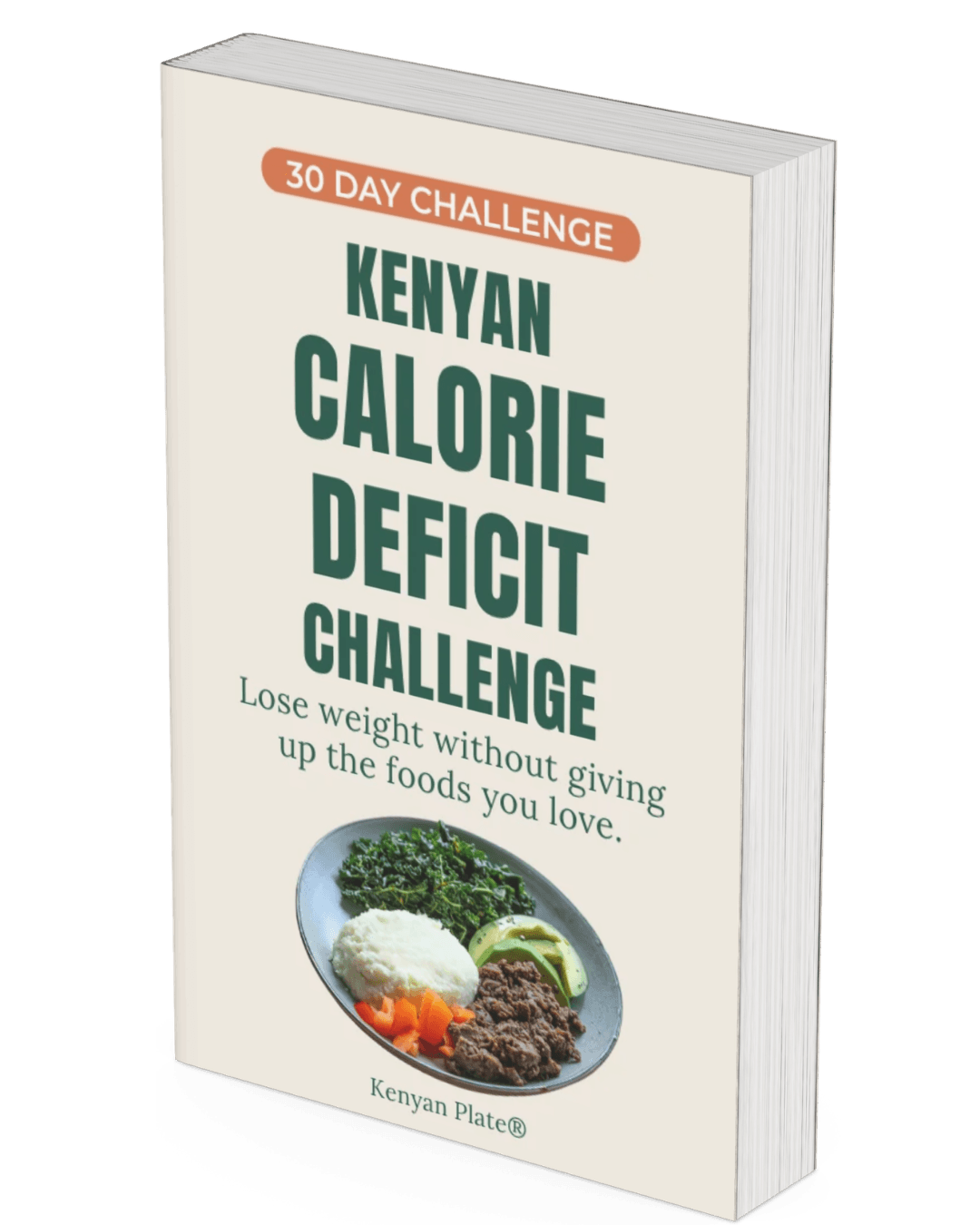
THE 30-DAY KENYAN CALORIE DEFICIT CHALLENGE
Lose Weight Without Giving Up the Foods You Love.
For the next 30 days, follow a practical Kenyan meal plan designed to help you create a sensible calorie deficit without living on salads, banning carbs or cooking separate “diet food.”
Instant access + printable trackers + VIP WhatsApp group support.
You have probably heard it before.
“Stop eating carbs.”
“No more rice.”
“Avoid chapati.”
“Don't eat after 6.”
“Just cut out everything you enjoy.”
And maybe you've tried.
For a few days.
Maybe even a few weeks.
But sooner or later, real life comes back.
There is ugali at home.
Chapati on Sunday.
Rice at lunch.
Cake at a birthday.
Nyama choma with friends.
And suddenly it feels like you've “broken the diet.”
What if the better question wasn't:
“What foods must I stop eating?”
But:
“How much of this food actually fits my goal?”
That is what this 30-day challenge teaches you.
Weight Loss Doesn't Require a List of Forbidden Foods.
Your body doesn't know whether your calories came from a fashionable “diet food” or from a normal Kenyan meal.
What matters over time is the overall amount of energy you eat compared with the amount your body uses.
That is the idea behind a:
CALORIE DEFICIT.
Not starvation.
Not eating 500 calories a day.
Not surviving on cabbage.
A sensible calorie deficit simply means learning to eat enough for your needs while consistently staying below what your body normally uses.
And you can do that while eating familiar foods.
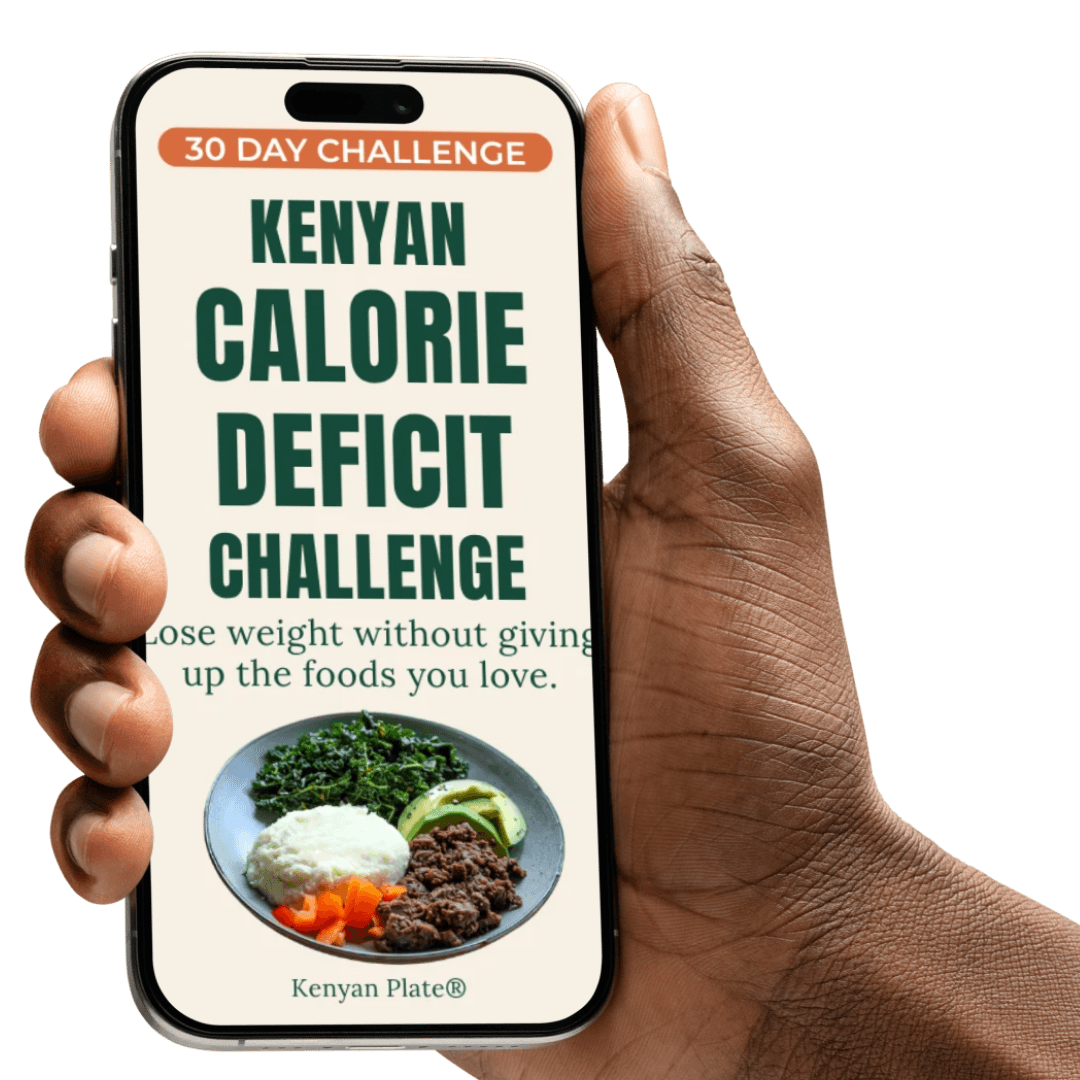
Introducing the
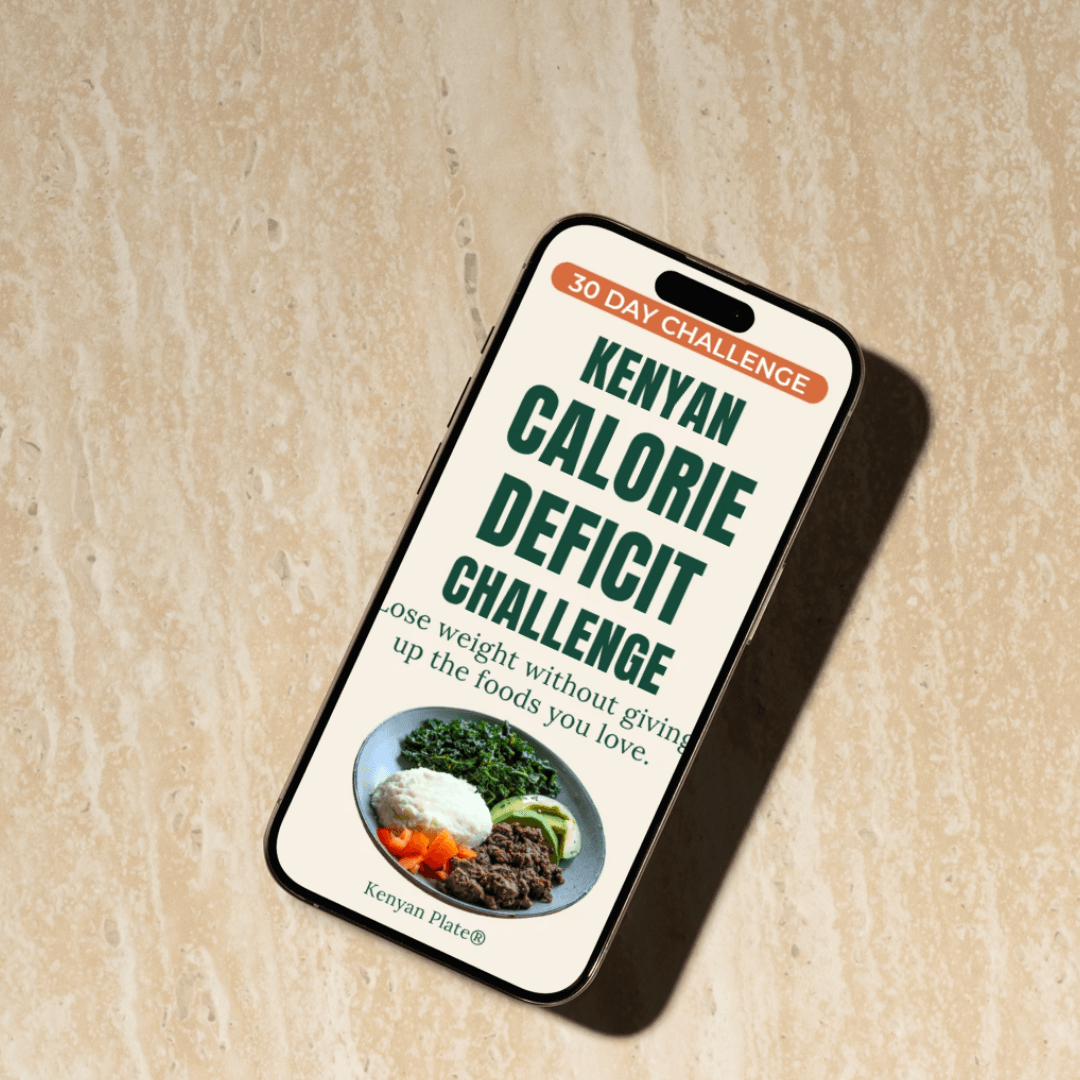
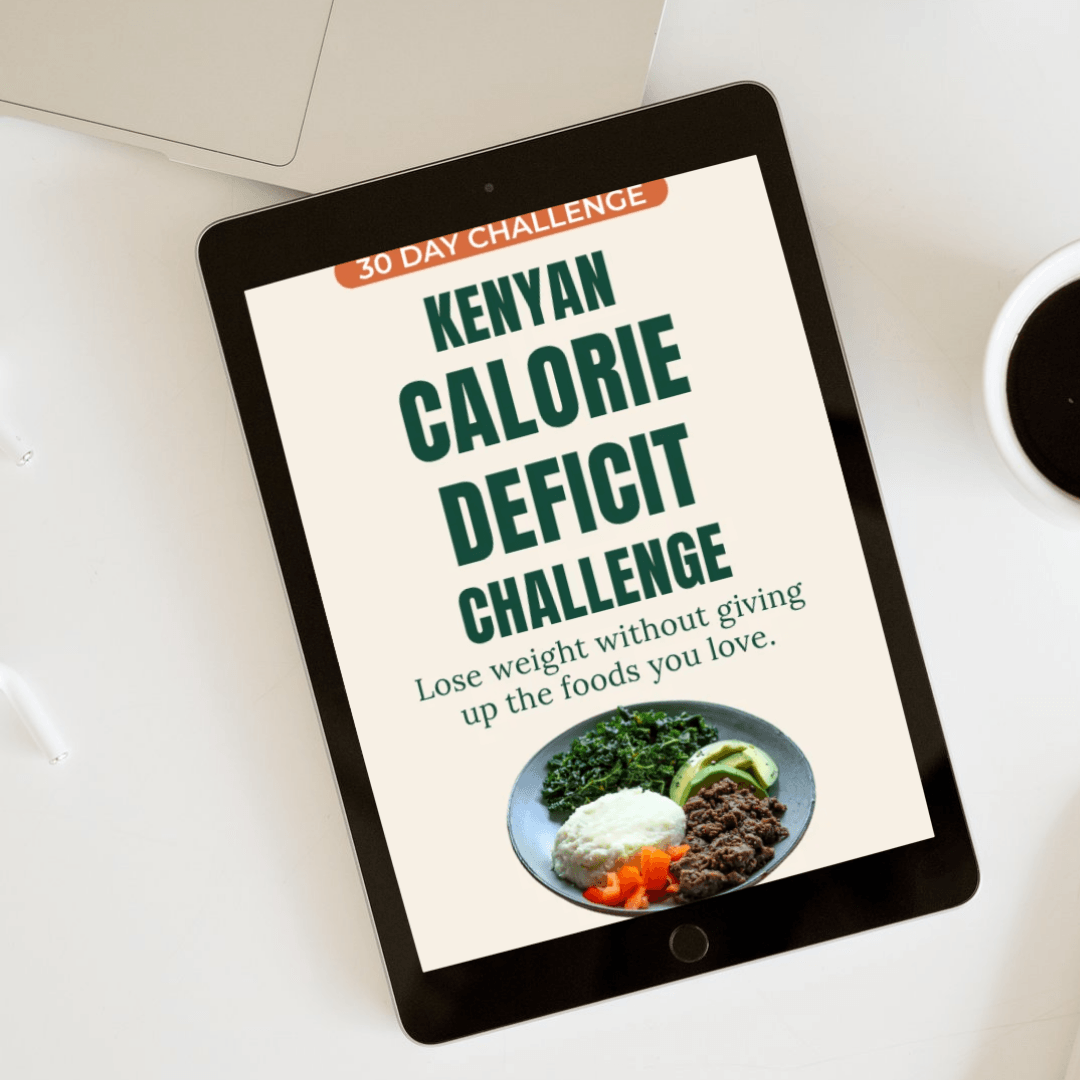
30-Day Kenyan Calorie Deficit Challenge
Lose weight without giving up the foods you love.
This isn't another ebook that spends 80 pages explaining nutrition and then leaves you asking:
“Okay... but what do I actually eat tomorrow?”
For every one of the 30 days, you get:
Breakfast
Exactly what to eat.
Lunch
A balanced Kenyan meal with practical portions.
Snack
A planned option when needed.
Dinner
Simple meals built around normal ingredients.
Estimated Calories
So you understand approximately what each meal contributes.
Your Daily Mission
One simple lesson that helps you get better at portions, hidden calories, weekends, eating out and food choices.
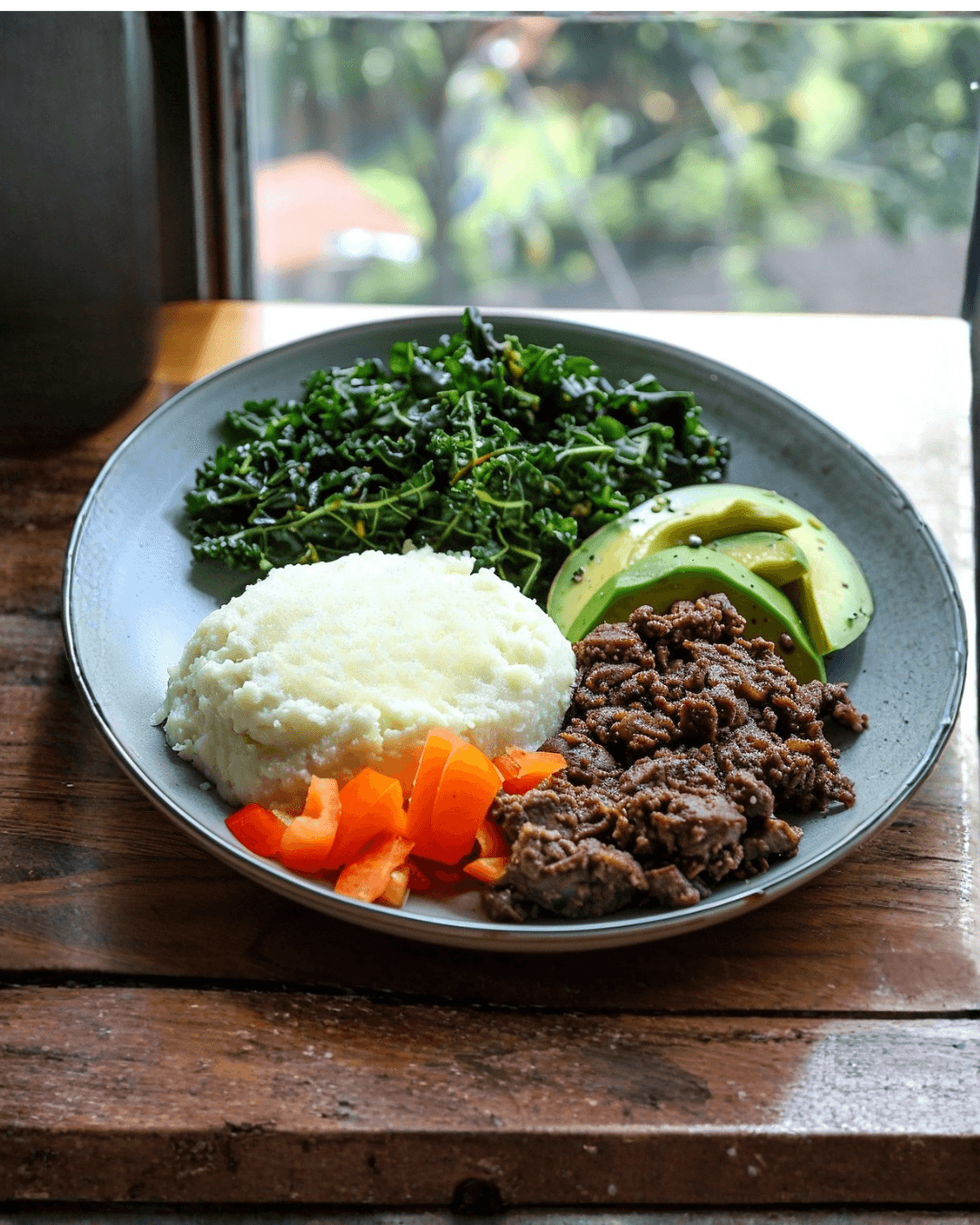
Yes. These Foods Can Fit.
UGALI ✓
You learn the portion rather than banning it.
RICE ✓
Control the amount and build the rest of the plate.
CHAPATI ✓
Enjoy the Kenyan foods you love.
POTATOES ✓
Boiled, roasted or prepared sensibly.
GITHERI ✓
A familiar Kenyan meal that can be portioned into your day.
FRUIT ✓
No need to fear a banana because it contains carbs.
NYAMA CHOMA ✓
The challenge even teaches you how to handle social meals.
CAKE OR TREAT ✓
One planned portion does not automatically ruin your progress.
What You're Getting:
Everything You Need for the 30 Days

The Complete 30-Day Meal Plan
Breakfast, lunch, snack and dinner for every day.
LIGHT, STANDARD & ACTIVE Portions
Adjust the same meals according to calorie deficit needs.

Estimated Calories Per Meal
Understand approximately how much each meal contributes to your day.

Kenyan Calorie Cheat Sheet
Quick-reference calories for common Kenyan foods.

Kenyan Deficit Plate Guide
Learn the simple plate
starting structure.

Smart Food Swaps
Learn how to swap foods without abandoning the plan.

Hidden Calories Checklist
Know where to look when your intake is higher than expected.

Eating-Out & Weekend Strategies
Restaurants. Nyama choma. Family meals. Office tea. Parties. Weekends.
This Challenge Is For You If...
You want to lose weight but don't want another “no carbs” plan.
You are tired of asking what you are allowed to eat.
You want an actual day-by-day meal plan, not just weight-loss theory.
You eat normal Kenyan food with your household.
You struggle with portion sizes.
You want to understand calories without becoming obsessed with them.
You want to enjoy ugali, rice or chapati while still working toward your goal.
You need structure for the next 30 days.
You have tried restrictive diets but struggle to maintain them.
You want to learn a method you can continue using after the challenge.
Start Your 30-Day Kenyan Calorie Deficit Challenge
You receive:
✓ Complete digital challenge guide
✓ Full 30-day Kenyan meal plan
✓ Breakfast, lunch, snack & dinner daily
✓ LIGHT / STANDARD / ACTIVE portion options
✓ Meal calories
✓ Kenyan calorie cheat sheet
✓ Smart food swaps
✓ Eating-out strategies
✓ 30-day tracker
✓ Quick-reference pages
Today: KSh 450
Regular: KSh 1,700
One-time payment. No subscription.
Your digital guide is delivered immediately after successful payment.

Doing It Alone Is Harder.
Your purchase also gives you VIP access to a Kenyan Plate Whatsapp challenge cohort.
Inside the WhatsApp group, participants can:
✓ Check in during the challenge
✓ Share meals and progress
✓ Stay accountable
✓ Learn from common questions
✓ Encourage one another through the difficult days
You still complete the challenge at your own pace.
The group simply gives you people doing the same thing beside you.
FAQ's
Short answers now, deep guides inside the challenge manual.
No.
You can use COUNT IT for more precision or PLATE IT for a visual portion-based approach.
Many participants may find it useful to track more carefully at first and become less dependent on counting as they learn portions.
Yes. Ugali appears in the meal plan. The goal is learning how much fits your day.
No. Chapter 6 gives practical swaps for proteins, starches, vegetables and fruits.
The structure matters more than finding every exact ingredient.
No. The challenge encourages movement, but you do not need to “burn off” your food with exercise.
Your digital guide is delivered after successful payment.
Ready to Start?



Built with systeme.io.
Part 1: Foundations
Welcome to the 14-Day No Carb Challenge. This program is designed to give you a clear, structured way to reset your eating habits, shed excess weight, and boost your energy by cutting out processed carbohydrates for just two weeks.
Why only 14 days?
Because change feels more doable when it has a clear finish line. Two weeks is long enough to see visible and measurable results, yet short enough that you can commit without feeling overwhelmed. Think of it as a focused reset, not a lifetime sentence.
In this challenge, you’ll eat real foods like meats, fish, eggs, leafy greens, healthy fats, and low-carb vegetables that are affordable and available in Kenyan homes and markets. You won’t need fancy products, imported powders, or complicated recipes. Just simple meals made from foods you already know, arranged in a way that works for fat loss and steady energy.
You’ll also learn how to track progress in practical ways: photos, waist measurements, and energy levels and not just the number on the scale. These markers will help you see improvements.
Most importantly, this challenge is not about punishment or starving yourself. It’s about proving to yourself that you can commit, stay consistent, and discover how much better your body feels when you fuel it with the right foods.
By the end of 14 days, you should notice changes in how your clothes fit, how light and clear you feel, and how steady your energy remains throughout the day. And if you choose to continue beyond the two weeks, you’ll already have the foundation to do so with confidence.
This is your reset. Let’s begin.
Chapter 1: The No-Starch Kenyan Way
For 14 days, we’re removing starches and added sugar so your body can reset. In Kenya, that means skipping ugali, chapati, rice (including pilau), matoke, potatoes, githeri, bread, pasta, cereal, mandazi/cakes, soda and juices. You’ll build meals from protein, low-carb vegetables, and healthy fats you can buy in any supermarket or open-air market.
Why remove ugali/chapati/rice/pilau/matoke/potatoes/sugar?
1) Blood sugar control (and cravings)
Starches (ugali, rice, chapati, potatoes, matoke) and sugars digest into glucose quickly.
Frequent high-carb meals keep insulin elevated making your body stay in “store fat, don’t burn it” mode.
Removing starches calms this cycle. Within days, many people report fewer cravings and steadier energy.
2) Water weight and bloating
Carbs are stored with water (each gram of glycogen binds several grams of water).
When you lower carbs, you shed water first. As a result, bloating reduces and the waist often shrinks in week one.
3) Appetite and satiety
Protein + healthy fats + fibre-rich veg keep you full longer than chapati-heavy or rice-heavy plates.
Balanced, on-plan meals naturally reduce snacking.
4) Inflammation and skin clarity (non-medical observation)
Many notice less puffiness and clearer skin when dropping refined carbs and sugary drinks.
In conclusion, starches and sugar push your blood sugar up, push insulin up, and keep fat locked in storage. Pull them out for two weeks and your body responds quickly through less water retention, fewer cravings, and easier fat use.
What to expect in the first 3–5 days
Days 1-2: The easy win
Less bloating, lighter feeling after meals.
You might feel ................................................. JOIN THE CHALLENGE FOR THE FULL GUIDE.
CHAPTER 1 — The Promise & What You’ll Track
This is not a crash diet.
It’s a 21-day rhythm that helps you feel lighter, flatter, and more in control while using local Kenyan foods and 20-minute daily habits.
You’ll reset your digestion, calm bloating, and rebuild consistency by:
Choosing gut-calming foods that reduce puffiness.
Keeping smart carbs only at lunch (your “carb window”).
Doing short posture and deep-core sessions.
Protecting your sleep and a 12-hour overnight digestive rest.
What This Challenge Will Do
Help your waist feel flatter and your clothes fit more comfortably.
Reduce daily bloating (gas, water retention, “food baby” feeling).
Build simple, repeatable meal rhythms with everyday Kenyan foods.
Improve consistency through small, daily wins and 10–20 minutes of movement.
What It Won’t Do
It won’t remove starches forever. You’ll still enjoy measured sweet potato, nduma etc at lunch only.
It won’t require powders, pills, or expensive ingredients.
The Four Pillars Behind Your Results
Gut-Calm Eating: Low-bloat meals, digestion spices like ginger, cumin and gentle fibre.
Midday Carb Window: Measured starch at lunch only. None at dinner.
Rhythm Over Restriction: 12-hour overnight digestive rest.
Posture & Deep Core: 8-minute Morning Debloat Routine + 10-minute post-lunch walk.
What Success Looks Like
Days 1–3 — Reset: You’ll feel lighter in the mornings and less puffy after dinner.
Days 4–7 — Rhythm: Energy steadies, digestion evens out, waistband feels looser.
Days 8–14 — Core: Midsection firms up, appetite stabilizes with your carb window.
Days 15–21 — Lock-In: “Bloat-free” feels normal, and you can eat out without the evening swell.... JOIN THE CHALLENGE FOR THE FULL GUIDE.